


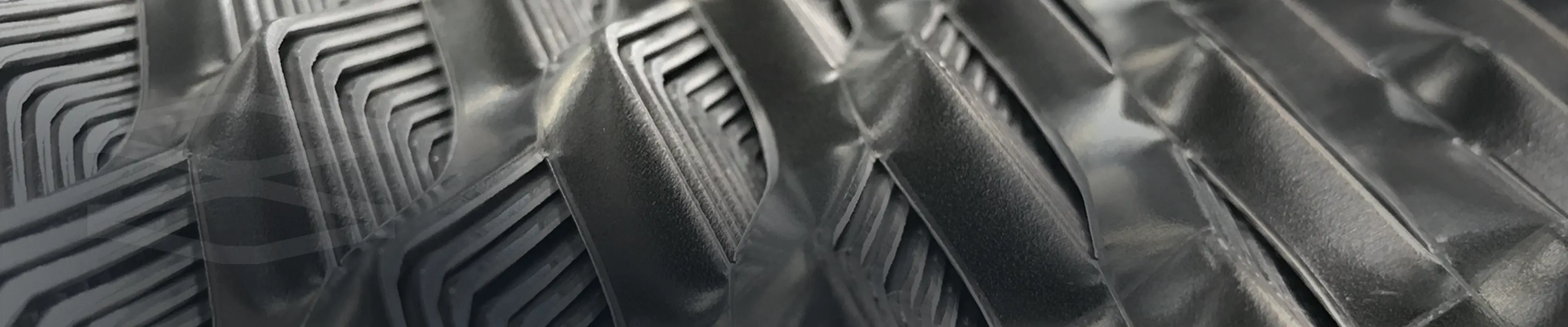

SKRL-461

- Model:SKRL 461
- Thickness:0.4mm
- Weight:1.6 kg/m² (± 10%)
- Lengths:610 x 2000mm (Customized Size available)
- Material:Pre-galvanized steel
| Ref. No. | Material Thickness | Weight (± 10% kg/m2) | Material | Standard Sheet size | Max. span |
| SKRL361 | 0.3 | 1.2 | Pre- Galvanized | 2500x610 | 500 |
| SKRL461 | 0.4 | 1.6 | Pre- Galvanized | 2500x610 | 600 |
| SKRL561 | 0.5 | 2 | Pre- Galvanized | 2500x610 | 700 |
- This product complies with
- ASTM C847: Standard specification for metal lath. Ensures the rigidity, strand size, and structural integrity of the ribbed metal lath.
- BSEN 10327-2004: Continuously hot-dip coated strip and sheet of low carbon steels for cold forming
Ribbed Lath / Rib Lath Features & Benefits
Q1: What is Rib Lath?
A: Ribbed Lath is a reinforced metal lath with longitudinal V-shaped ribs designed to provide higher strength and rigidity compared with standard metal lath. It is commonly manufactured from pre-galvanized steel and widely used in plastering, rendering, concrete construction, and fireproofing applications.
Q2: What are the main advantages of Rib Lath?
A: Ribbed Lath offers excellent mechanical bonding performance due to its mesh openings and ribbed structure. It helps plaster, cement, or render firmly adhere to the surface, reducing the risk of cracking or peeling over time.
Its reinforced ribs also provide greater tensile strength and support, making it suitable for larger spans and demanding construction environments.
Q3: Why is Ribbed Lath suitable for plastering applications?
A: The ribbed mesh structure provides strong keying for scratch coats and plaster applications. It helps maintain a consistent plaster thickness and improves bonding performance for walls, ceilings, and decorative plaster works.
Ribbed Lath is also commonly used for plaster machine applications due to its stable structure and easy installation.
Q4: Can Ribbed Lath be used as permanent formwork?
A: Yes. High Rib Lath is frequently used as a stay-in-place or permanent formwork system for concrete construction. After concrete pouring, the lath remains embedded within the structure, eliminating the need for formwork removal and improving construction efficiency.
Q5: What construction applications commonly use Ribbed Lath?
A: Ribbed Lath is commonly used for:
- Concrete construction joints
- Walls and ceilings
- Partition walls
- Fireproofing for steel beams and columns
- Tunnel walls and support structures
- Basement waterproof protection layers
- Ornamental plaster works
- Large-area plastering applications
Q6: What material is Ribbed Lath made from?
A: Ribbed Lath is typically produced from pre-galvanized steel, providing good corrosion resistance and long-term durability for construction applications.
Ribbed Lath / Rib Lath Technical Specifications
1.Performance Standards
- ASTM A653 / A653M – Steel Sheet, Zinc-Coated or Zinc-Iron Alloy-Coated by the Hot-Dip Process
- ASTM C841 – Installation of Interior Lathing and Furring
- ASTM C847 – Metal Lath
- ASTM C926 – Application of Portland Cement-Based Plaster
- ASTM C1063 – Installation of Lathing and Furring for Portland Cement-Based Plaster
- Intertek CCRR-0204 – Metal Lath Performance Reference
2.Framing & Support Spacing (per ASTM C1063)
1/8" Rib Lath
- Suitable for both vertical and horizontal applications.
- Can span framing supports up to 16" on center (o.c.) for wood or metal framing systems.
3/8" Rib Lath
- Provides higher rigidity and load support compared to 1/8" Rib Lath.
- Commonly used for walls and ceilings where framing spacing is up to 24" on center (o.c.).
Spray-Rib Lath
- Manufactured with 3/8" high ribs and reinforced with 50 lb. kraft paper spot-attached between the ribs.
- Designed to minimize plaster loss over open framing areas.
- Particularly suitable for plaster or stucco applications using plaster spray pumps.
- Helps improve plaster retention and application efficiency during construction.
RELATED PRODUCTS


